Key article takeaways
- Audit your data sources: Evaluate whether your current data partners offer the longitudinal depth and clinical integration required for future regulatory standards.
- Prioritize interoperability: Ensure your internal systems can ingest and link diverse data types (claims, EHR, Lab) to create a holistic patient view.
- Explore specialized AI: Move beyond generic analytics tools and investigate AI solutions tailored to your specific therapeutic focus areas to enhance predictive capabilities.
The life sciences industry is undergoing the same shift as other industries regarding generative AI. Life sciences companies very clearly recognize the value that generative AI can provide, and this recognition is now broad‑based and explicit at the executive level. The gap is not about belief in value; it’s about how fast and how safely that value can be operationalized in a highly regulated industry. The accuracy of derived insight matters significantly. For years, the life sciences industry operated under the assumption that “more data is better.” Numerous amounts of information were gathered, hoping that volume alone would yield the insights needed for successful drug development and regulatory approval. However, that paradigm must evolve to capture the value of generative AI. The focus needs to move sharply from the sheer quantity of data to its quality, relevance, and interoperability.
From volume to value: Prioritizing data quality
In the past decade, accumulating data was a primary goal. Pharmaceutical companies invested heavily in acquiring vast datasets, often realizing later the burden of integration and validation. This approach frequently resulted in fragmented views of the patient journey, where quantity masked the lack of depth required for rigorous regulatory submissions.
In order to gain the correct insight, in particular when using AI, the competitive advantage lies in “research-grade” data. This refers to datasets that are large and also longitudinal, complete, and verifiable. Regulatory bodies like the FDA and EMA are increasingly scrutinizing the provenance and quality of real-world evidence (RWE) used in submissions. They require evidence that accurately reflects the target population and provides a complete picture of patient outcomes.
For life sciences, the implications are significant. A massive dataset with significant gaps in clinical history or inconsistent coding is less valuable than a smaller, highly curated dataset that links claims, electronic health records (EHRs), and laboratory results. High-quality data reduces the noise in analysis, allowing for more precise signal detection in safety monitoring and effectiveness studies. This precision is essential for ensuring regulatory success and avoiding costly delays in the approval process.
Beyond claims: Integrating clinical and laboratory data
While administrative claims data remains a foundational element of health economics and outcomes research (HEOR), it has limitations for some research objectives. Claims data is excellent for tracking utilization and costs but may lack the clinical nuance required for modern drug development. It tells us what happened (a procedure was billed), but not necessarily why (the clinical reasoning) or the specific biological result (the lab value).
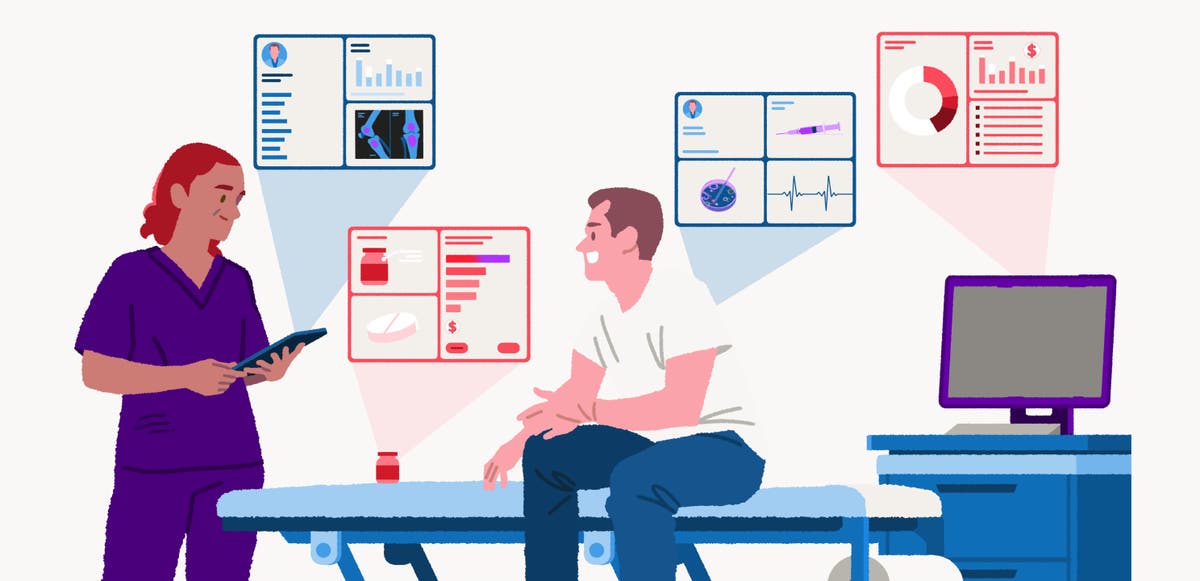
To bridge this gap, pharma data innovation is now centered on interoperability. We are seeing a surge in integrated data platforms that seamlessly merge:
- Closed claims: Providing a comprehensive view of patient interactions across the healthcare system.
- EHR data: Offering rich clinical details, including physician notes and symptomatology.
- Laboratory results: delivering critical biomarker information essential for precision medicine.
This integration allows researchers to construct a holistic view of the patient experience. For example, by linking claims data with lab results, market access teams can demonstrate the cost-effectiveness of a therapy and its superior clinical outcomes in patients with specific biomarker profiles. This level of detail is crucial for negotiating favorable formulary placement and demonstrating value to payers in a crowded market.
Contextual AI: Tailored models for specific use cases
AI is no longer a futuristic concept; it is a practical tool reshaping analytics. However, the “one-size-fits-all” approach to AI is fading. The trend for 2026 is the deployment of specialized, context-aware AI models designed for specific therapeutic areas and research questions.
Generic AI models often struggle with the intricacies of healthcare data, such as interpreting unstructured physician notes or accounting for bias in patient populations. Advanced AI integration now involves training algorithms on highly specific, de-identified datasets relevant to the disease state in question.
These tailored models are revolutionizing several key areas:
- Cohort selection: AI can rapidly identify eligible patients for clinical trials from RWD sources, significantly speeding up recruitment and ensuring diversity.
- Predictive analytics: Machine learning algorithms can analyze longitudinal patient trajectories to predict disease progression or identify patients at risk of adverse events.
- Synthetic control arms: By generating synthetic control arms from RWD, AI enables companies to reduce the size and cost of control groups in clinical trials, a practice gaining traction with regulators for rare disease studies.
The critical role of diverse data
A major critique of historical RWD sources has been their lack of representativeness. Data sourced heavily from specific academic medical centers or single-payer systems often fails to reflect the broader population that will ultimately use a drug.
As we enter 2026, there is a heightened emphasis on inclusivity in data sourcing. Ensuring regulatory success requires demonstrating that a drug is safe and effective across diverse demographic groups. For example, pharmaceutical companies are actively seeking data partners that can provide access to underrepresented populations.
Beyond social responsibility, representative data is a business necessity. If a drug’s efficacy is only proven in a narrow demographic, its market potential is artificially limited. Comprehensive RWE analytics that encompass diverse racial, socioeconomic, and geographic backgrounds provide the robust evidence needed to support broad label indications and maximize market reach.
The evolution of integrated data platforms
The days of managing disparate datasets in silos are numbered. The friction caused by moving data between incompatible systems is a major bottleneck in R&D productivity.
Healthcare is moving toward unified platforms where data access, analytics, and visualization coexist. These platforms prioritize raw data access, allowing data scientists to perform complex queries without being constrained by rigid graphical user interfaces (GUIs). This flexibility is vital for answering bespoke research questions that standard dashboards cannot address.
Investing in interoperable data systems translates to speed. When HEOR, commercial, and clinical teams can access a single, trusted source of truth, decision-making accelerates. Whether it is responding to a payer’s objection or adjusting a clinical trial protocol, the ability to derive insights rapidly from integrated data is a key differentiator in a competitive landscape.
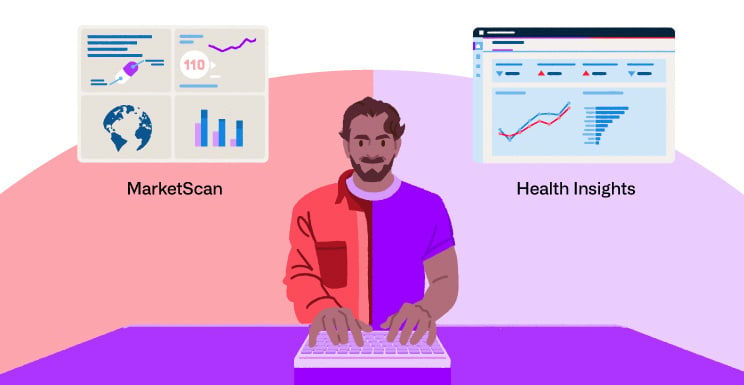
MarketScan meets evolving RWD demands
For sustained success in 2026 and beyond, life sciences organizations need research-grade, interoperable RWD that can drive precision analytics, regulatory submission success, and optimal market access. MarketScan is uniquely positioned to meet these demands. With extensive longitudinal data assets that seamlessly integrate closed claims, EHR, and laboratory results, MarketScan delivers the depth and data fidelity necessary to address complex research questions and regulatory scrutiny.
By partnering with MarketScan, organizations gain access to a single source of truth, supporting rigorous evidence generation while accelerating time-to-insight across HEOR, R&D, and commercial teams. These capabilities translate into tangible advantages: reducing approval timelines, supporting payer negotiations with robust clinical and economic evidence, and enhancing market differentiation through comprehensive patient insights.
Connect with our team today to learn more.