What you need to know
- As new imaging techniques and technologies have emerged to support care delivery across many medical specialties and ‘ologies, the way images are stored, accessed, and shared hasn’t kept pace.
- Radiology, cardiology, oncology, dermatology, orthopedics, mammography, and pathology – they’re all managing their own data and workflows, which creates silos.
- The result: Clinicians spend too much time hunting for relevant patient information, slowing down workflows and causing care delivery to suffer – to the detriment of the patient and the health system. Merge Imaging Suite for Enterprise Imaging and Radiology is changing that.
- Let us know if you want to see a demo of enterprise imaging in action.
By unifying imaging data and making it accessible to care teams across departments, enterprise imaging empowers healthcare organizations to eliminate silos, accelerate diagnoses, and give every clinician — regardless of specialty or location — more frictionless access to the images they need, when they need them.
No diagnostic department is an island
When it comes to patient care, radiology and other departments can’t operate as islands within their organization. The imaging solutions they use can’t be islands, either. Running a multi-system, multi-vendor environment creates an enormous level of complexity:
- Separate upgrade cycles with different vendors
- More workflow downtime and interruption
- Potentially more workstations and hardware
- More testing
- More integration interfaces, and licenses to purchase (such as HL7)
- Less actual integration and synergy
- More prefetching, to make up for the silos
Less complexity in your imaging workflows starts with bringing every department onto the same page: one imaging platform, and one user experience, for the entire enterprise.
Why centralized imaging data matters
At the heart of a successful enterprise imaging strategy is the Vendor Neutral Archive, or VNA. This is your centralized repository for all patient images — X-rays, ultrasounds, CT scans, cardiology studies, smartphone photographs, and more — regardless of which system or healthcare provider originally captured them.
Without a VNA, a patient’s imaging history can be scattered across multiple disconnected systems. A referring physician ordering a follow-up CT might have no visibility into a prior MRI taken three floors away. That information gap can slow clinical decision-making or lead to duplicated studies and unnecessary patient exposure.
A VNA solves this by consolidating imaging data into one accessible archive, linked directly to the patient’s electronic medical record.
Why universal viewing capabilities matter
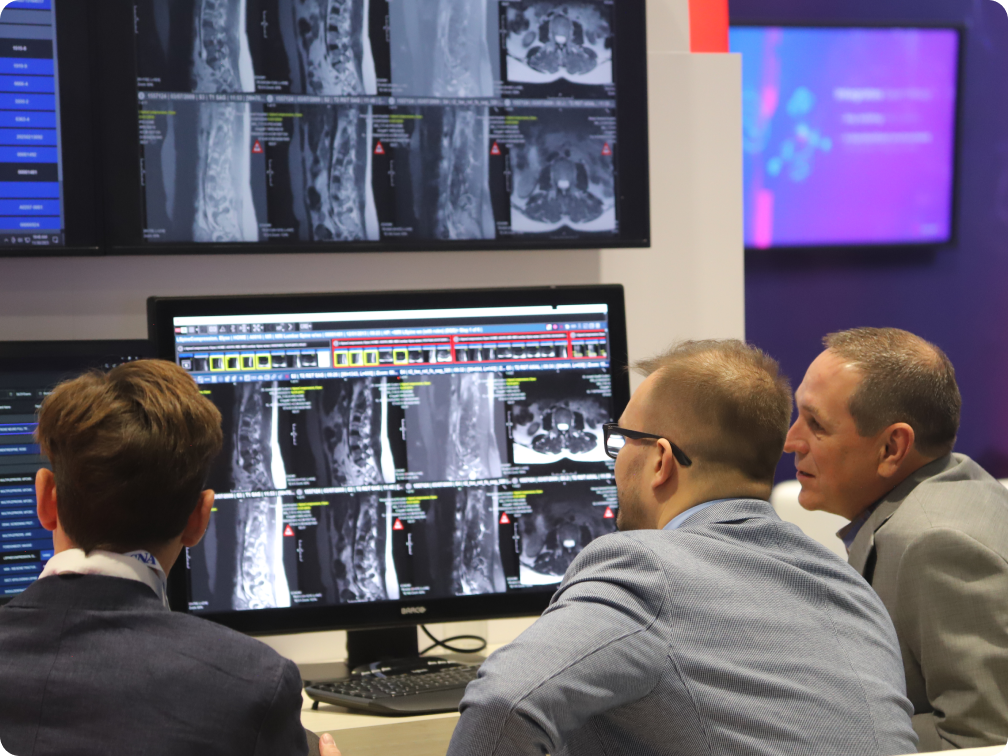
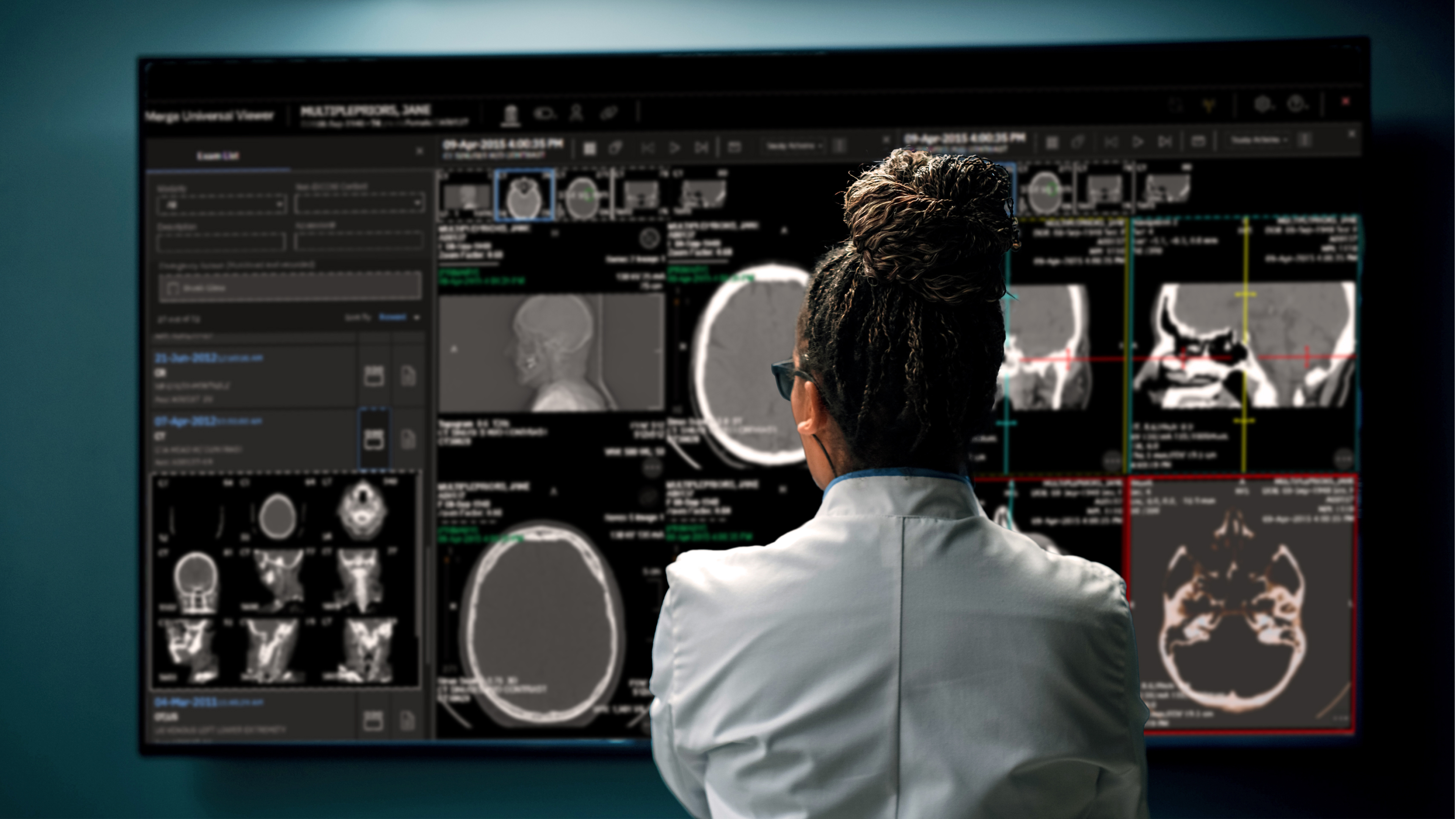
Pair the VNA with a universal viewer that supports both diagnostic reading for physicians at their workstations, as well as referential viewing for clinicians elsewhere to see images from any device. Care teams can finally access the full picture of a patient’s imaging history at the point of care, without logging into multiple systems or requesting files or physical media like CDs from separate departments.
Streamlining workflows with AI and orchestration
Access to images is only part of the challenge. How the patient study moves through the end-to-end imaging process also matters. Workflow orchestration automates the routing of studies to the right specialist, flags urgent findings, and reduces the manual handoffs that slow down radiology departments every day.
Add artificial intelligence (AI) into the mix and the impact grows. AI tools can help prioritize worklists, automate measurements, and surface relevant prior studies automatically — so radiologists spend less time navigating systems and more time interpreting images for accurate and timely diagnoses.
The evidence backs this up. Numerous studies show that AI-assisted workflows can meaningfully improve efficiency and reduce the burden on physicians, particularly in high-volume environments where their burnout is a real and growing concern.
How Merge Imaging Suite brings it all together
Merge Imaging Suite is an enterprise imaging platform built on a 100% cloud-native foundation that can support imaging workflows within and between departments. It is modular and scalable, with capabilities to fully support radiology, mammography, oncology, aspects of cardiology, and additional ‘ologies. It offers customers a single vendor and platform. No departmental silos.
This platform supports hybrid-cloud deployment, integrates with existing PACS, RIS, and EHR systems, and is backed by cybersecurity protocols that are HIPAA-compliant, SOC2 Type II-compliant, and Censinet-certified. Healthcare organizations can scale this solution with confidence, without compromising on data security or compliance.
Real-world results
The benefits of Merge aren’t theoretical. Organizations using Merge Imaging Suite may expect:
- 23% more productive reading for radiologists tracking lesion progression1
- 50% fewer actions across the reading workflow 2
- 34% more equitable distribution of caseloads across reading teams3
One customer, MultiCare Health System, partnered with Merge to accomplish a unified radiology and enterprise imaging strategy. They standardized on Merge PACS for radiology and, on the same imaging platform, also deployed Merge Imaging Suite for enterprise imaging access to care teams across MultiCare facilities in the Pacific Northwest. The project will grow to provide access to smaller, under-resourced healthcare providers in rural areas across their ecosystem, so that people living in those underserved areas can receive quality care.
“What MultiCare needed was an enterprise imaging solution that could expand through all the ‘ologies, not just radiology. When we looked at what Merge was offering, the decision just made sense.”
-- Leonard Santos, Director of IT Application Services, MultiCare Health System
6 types of ROI for single-vendor, cloud-native enterprise imaging
When you buy multiple modules of Merge Imaging Suite, you’re not just bolting on additional tools. You’re assembling a collection of solutions designed to work together from day one. The design is standards-based to integrate seamlessly with your existing technology investments.
As a unified imaging environment, Merge Imaging Suite delivers real value on several fronts.
- Imaging Suite is complete: Users have a complete, unified view of imaging data. When the viewer, archive, and workflow tools are built on the same underlying data model, it’s much easier to see the full clinical picture. No more stitching together data from systems that were never designed to work together.
- Imaging Suite is intrinsically integrated: With Imaging Suite you have far less friction between systems. In mixed‑vendor environments, integration becomes an ongoing project. Interfaces need constant attention. Upgrades can break things. Data doesn’t always flow the way it should. With a single vendor, interoperability can be tighter and more predictable right out of the box.
- Imaging Suite feels the same: The user experience is consistent. Radiologists and clinicians aren’t bouncing between different interfaces or relearning workflows depending on the task. Consistency matters. It helps speeds things up and reduce mistakes, particularly when reviewing or comparing multiple studies.
- Imaging Suite evolves: You tend to see faster, more coordinated innovation with one vendor. They can introduce enhancements that work across the entire environment at once — like visualization improvements that automatically apply to prior studies and different modalities, across all modules.
- Imaging Suite is reliable: Security, support, and accountability are simpler too. Instead of juggling multiple vendors when something goes wrong, there’s a single partner responsible for security updates, performance, uptime, and issue resolution.
- Imaging Suite is cost transparent: While upfront costs may not always be lower than competitors or a multi-vendor environment, the ultimate total cost of ownership often is. Fewer integrations, less maintenance overhead, and smoother operations tend to add up in cost savings over time.
Of course this approach is not a universal answer; there are trade‑offs to consider for every organization’s unique needs, such as the risk of vendor lock‑in, greater reliance on a single vendor roadmap, and less need to mix and match best‑of‑breed tools.
Build an enterprise imaging ecosystem that grows with you
The shift to enterprise imaging isn’t a one-time project — it’s a long-term strategy. Healthcare organizations that invest in a modular, scalable platform today are better positioned to onboard new sites, integrate emerging AI applications, and adapt to changes over the long run. With Merge Imaging Suite, your organization can…
- Deploy to the cloud in six months.
- Onboard new sites in as few as 60 days.
- Enjoy the flexibility to grow without the friction of total system overhauls or retraining users.
If your organization is still managing imaging data and systems in a siloed way, now is the time to think differently.
Sources:
- Source: “Clinical Research Study: Reducing Chest CT Interpretation Time Using Advanced Lung Nodule Workflow Functionality” 2022 Xie, Y. Sati, M.
- Source: Source: Merge product and user research
- Source: “An Intelligent Worklist for Equitable Study Distribution” October 2023. Bagley L., Park S.Y., Weatherbee C., Kis F., Sati M.